

The global security landscape is facing extremely complex developments across both Europe and the Middle East. In British waters, Russian warships have openly escorted oil tankers through the English Channel—an action widely seen as a direct challenge to the authority of the Royal Navy and the government in London. At the same time, the fragile ceasefire between the United States and Iran is on the verge of collapse, with both sides accusing each other of violations.
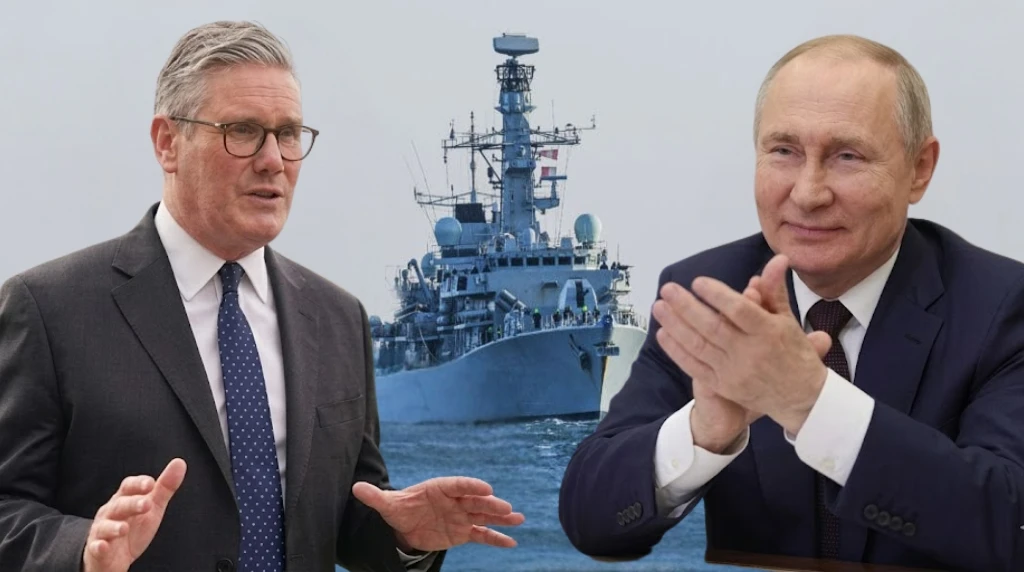
Russia “Mocks” the Power of the British Royal Navy
According to recent reports, Russian President Vladimir Putin has deployed warships through the English Channel to escort oil tankers belonging to a so-called “shadow fleet” transporting sanctioned oil.
This move comes just weeks after UK Prime Minister Keir Starmer issued a firm warning that Britain would seize such suspicious tankers. However, since that statement, the UK has not carried out any seizures—while France reportedly has.
Commentators on GB News described Russia’s actions as an open “mockery” of Starmer. One expert noted:
“Putin appears extremely confident, almost laughing in Starmer’s face—daring Britain to act. He is sending ships into our waters calmly, expecting no consequences.”
The incident has also reignited concerns about the long-term decline of the Royal Navy’s capabilities over the past two decades, potentially leaving the UK in a weakened global position.
Risk of US–Iran Ceasefire Collapse and Oil Market Turmoil
Meanwhile, in the Middle East, the ceasefire between the United States and Iran is showing signs of breaking down. The immediate trigger is reported to be Israel’s launch of 100 rapid airstrikes within just 10 minutes targeting densely populated areas in Beirut, Lebanon.
Israeli Prime Minister Benjamin Netanyahu insists the strikes do not violate the agreement, while Tehran firmly considers them a breach.
In response, Iran has threatened to resume war with the United States, close the strategic Strait of Hormuz, and attack a major Saudi Arabian oil pipeline. Such a move would directly undermine diplomatic efforts previously associated with Donald Trump and expose Washington’s current inability to guarantee “freedom of navigation” in the region.
The immediate effect of the ceasefire—before signs of collapse emerged—was a dramatic drop in global oil prices, falling more than 16% overnight due to market optimism. However, if the Strait of Hormuz is shut down, Europe and the United Kingdom could face a massive energy crisis.
NATO Divisions and the UK’s Uncertain Role
Amid escalating tensions, former U.S. President Donald Trump once again criticized NATO allies:
“They were tested, and they failed… It’s sad that NATO has turned its back on the American people over the past six weeks.”
Washington is reportedly considering the possibility of withdrawing from NATO, largely due to frustration with European nations refusing to provide military bases and support during the conflict with Iran.
In this context, Prime Minister Starmer’s urgent trip to Saudi Arabia has been met with skepticism. Critics mock him as being “a day late and a dollar short,” questioning the effectiveness of the visit—especially after the UK chose not to participate in U.S. airstrikes.
However, some analysts argue that strengthening ties with Gulf oil-producing nations may be a crucial step for the UK to safeguard its domestic energy security, particularly if the Strait of Hormuz remains closed for an extended period.


