

The first season of America’s Culinary Cup has delivered plenty of high-level cooking and intense competition, but nothing has shaken viewers more than the shocking elimination of fan-favorite chef Buddha Lo just one episode before the finale.
Now, fans across social media are accusing the show of prioritizing dramatic television moments over rewarding the strongest chef in the competition.
The controversy exploded immediately after the semifinal episode aired, with many viewers calling Buddha’s exit “the biggest robbery of the season” and even “the most shocking elimination in the show’s history so far.”
And honestly, it’s not difficult to understand why.
The semifinal challenge centered around one of the most technically difficult concepts in professional cooking: mastering flavor profiles. The remaining four chefs were randomly assigned one dominant taste category — sweet, sour, salty, or bitter — and tasked with creating both a hot and cold dish around that flavor while still maintaining balance.
Unfortunately for Buddha, luck immediately turned against him.
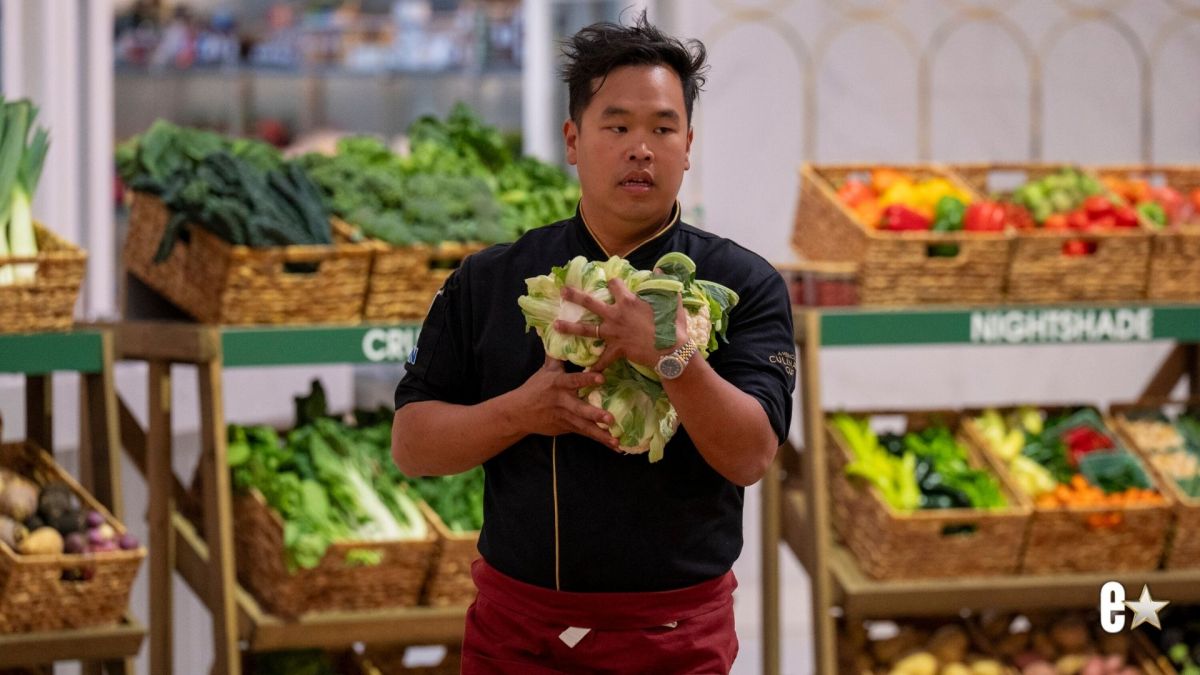
Out of all the available categories, Buddha randomly received “bitter,” which many professional chefs consider the hardest flavor profile to execute successfully. Unlike sweet or salty, bitterness can easily overpower an entire dish if not handled perfectly, leaving almost no room for error.
But that wasn’t his only disadvantage.
Because Chris Morgan won the previous challenge, he earned a powerful strategic advantage: 30 extra minutes of cooking time. However, the twist required him to steal time from his competitors.
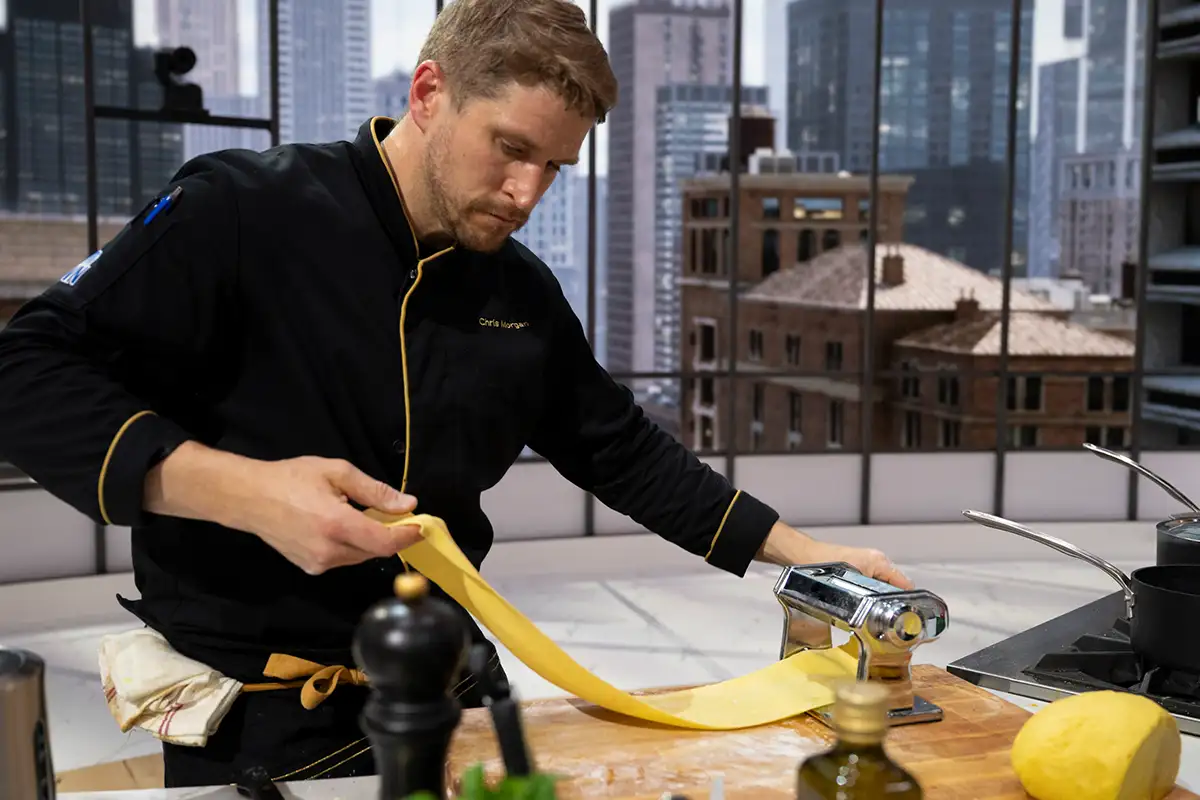
Chris ultimately chose to remove 15 minutes each from Buddha and Matt Peters, immediately placing Buddha under enormous pressure before the challenge had even properly begun.
Despite the setbacks, Buddha still fought his way through the round. However, after the judges scored the dishes, Matt and Cara Stadler advanced directly to the finale, while Chris and Buddha were forced into a sudden-death elimination cook-off.
The final challenge raised the pressure even further.
Both chefs had to create a single dish combining umami with one additional flavor profile — a task demanding extraordinary balance, creativity, and precision under extreme time pressure.
In the end: Chris survived and secured his place in the finale. Buddha Lo was officially eliminated.

And within minutes, the internet exploded.
Many viewers argued that the structure of the competition itself unfairly stacked the odds against Buddha. Fans pointed to the random flavor assignment system as inherently flawed, especially when certain categories are objectively more difficult than others.
Others criticized the production for creating twists that appeared designed more for shocking television than for identifying the best overall chef.
One viral post read:
“This show wanted a dramatic upset more than a fair result.”
Another wrote:
“Buddha losing after getting bitter AND losing time feels completely unfair.”
The backlash became even stronger because Buddha entered the competition carrying one of the most respected résumés in modern cooking television. As a Michelin-starred chef and two-time Top Chef champion, he was widely viewed as one of the strongest technical chefs in the cast — and by many fans, the clear frontrunner to win the entire season.
Throughout the competition, Buddha consistently delivered refined, high-level dishes while maintaining composure under pressure. That consistency made his semifinal elimination feel especially devastating to longtime viewers.
But what truly broke fans emotionally was Buddha’s final confessional after being eliminated.

“Of course, I’m bummed out,” he admitted.
“I love competition… but maybe this will be my last.”
That final line instantly spread across social media, with many fans expressing sadness at the possibility that Buddha may be stepping away from competitive cooking television entirely.
For many viewers, the statement felt bigger than just one elimination.
It sounded like exhaustion.
After years of competing at the highest level — and repeatedly proving himself as one of the best chefs reality television has produced — Buddha’s heartbreaking exit suddenly turned into a conversation about how far competition formats should go in manufacturing suspense.
To be clear, many fans still praised Chris for surviving under enormous pressure and earning his place in the finale fairly within the rules of the game. But even supporters of Chris admitted the episode left an uncomfortable feeling behind.
Because when one of the strongest chefs in the competition gets eliminated after losing time, drawing the hardest flavor category, and facing a high-pressure sudden-death cook-off, viewers inevitably start questioning whether skill alone was ever enough to survive.
And now, instead of celebrating the finalists, much of the internet is still asking the same question:
Did Buddha Lo lose the competition…
or did the format eliminate him first?


