

The Home Secretary has invoked sweeping powers to ban a major pro-Palestinian march through central London this weekend, citing an unacceptable risk of public disorder and the glorification of terrorism.

Suella Braverman made the order to prohibit the annual Al-Quds Day procession, which was scheduled to begin outside the Home Office on Sunday. The march, organized by the Islamic Human Rights Commission (IHRC), will now be confined to a static demonstration. The decision follows intense pressure and specific intelligence from the Metropolitan Police.
Authorities fear the event could become a flashpoint for serious violence. Police assessments highlighted a high likelihood of clashes with planned counter-protests and the potential for extremist rhetoric. The march has a history of controversy, including past arrests and the display of symbols associated with proscribed groups.
The IHRC, which has run the London event for decades, immediately vowed to legally challenge the ban. A spokesperson condemned the move as a “politically charged decision” that undermines civil liberties. The group insists its demonstration is a peaceful expression of solidarity with Palestinians.
Al-Quds Day, an international event initiated by Iran, opposes Israeli control of Jerusalem and Zionism. While organizers frame it as a legitimate protest, critics, including the government and groups like the Campaign Against Antisemitism, label it a “hate march.” They allege it provides a platform for antisemitism and extremist ideology.
Central to the government’s concern is the IHRC itself. A recent independent review of the Prevent counter-terrorism program described the IHRC as an “Islamist group ideologically aligned with the Iranian regime.” The report cited its history of extremist links and terrorist sympathies.
The IHRC has forcefully rejected these characterizations as defamatory. It describes itself as an independent NGO campaigning for justice. Its work includes legal support in discrimination cases and advocacy for Muslim prisoners. Its campaigns, however, are deeply contentious.
These include boycotting Israeli goods and opposing the Holocaust Memorial Day Trust for not recognizing Gaza as a site of genocide. The group established its own “Genocide Memorial Day.” Its chairman, Massoud Shadjareh, has publicly eulogized figures like Qasem Soleimani, a slain Iranian general designated a terrorist by the US.
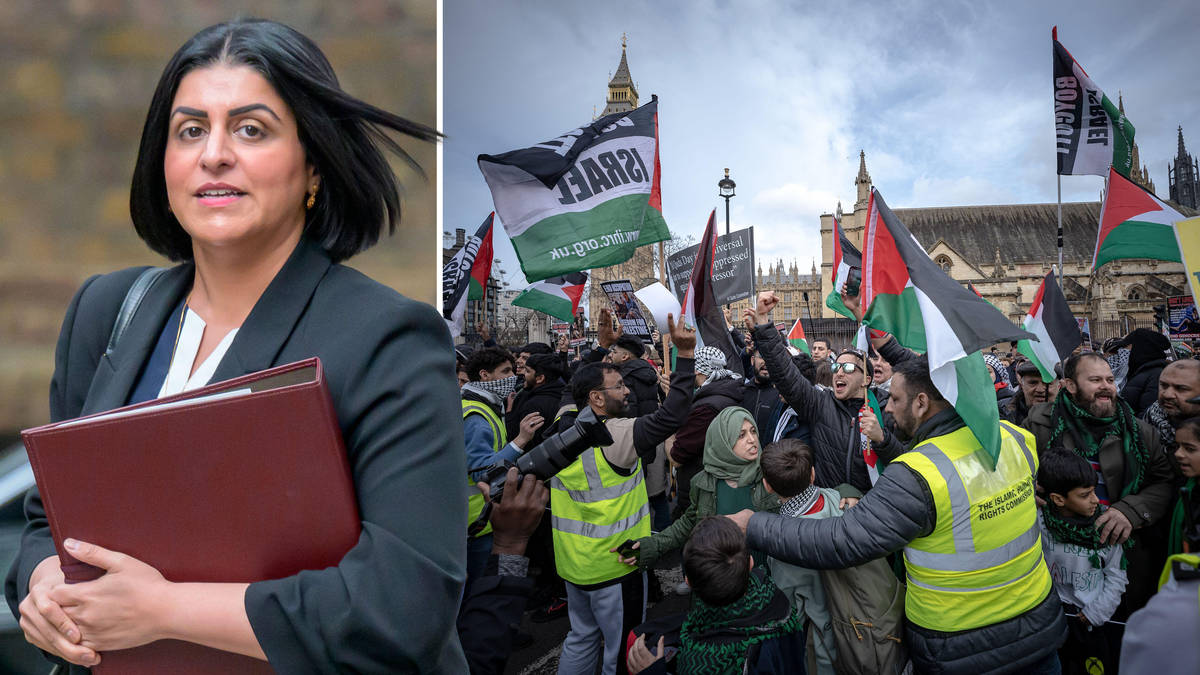
The Home Secretary’s legal authority stems from the Public Order Act 1986, allowing bans to prevent serious disruption. The power to prohibit a moving procession is distinct from regulating static assemblies, which face a much higher legal threshold for restriction.
This distinction is why Sunday’s event can proceed as a stationary protest. The Metropolitan Police will now face the complex task of managing a volatile static demonstration and any opposing gatherings, all under intense political and public scrutiny.
Community tension is palpably high following the October 7th attacks and the subsequent war in Gaza. The police assessment reportedly warned the march could exacerbate these tensions, inflame community relations, and be used to promote extremist propaganda.
The ban represents a significant and rare intervention by the Home Office into the operational discretion of the Metropolitan Police. It underscores the government’s hardening stance on protests perceived as threatening community cohesion or national security.
Backlash from civil liberty groups is expected, who will argue the ban sets a dangerous precedent for the suppression of political speech. Conversely, security analysts argue the specific links and history of the organizing group justify the extraordinary measure.
All eyes will now be on the designated protest site this Sunday. The situation presents a major test for police command and control capabilities, with the potential for confrontation now concentrated in a single location rather than along a march route.
The government’s decision signals a willingness to confront organizations it views as extensions of foreign state influence. The IHRC’ promised legal challenge could set a pivotal precedent for the boundaries of protest and security in the UK.
Ultimately, the ban reflects a stark official judgment: that the risks posed by this specific march, organized by this specific group, at this moment of heightened sensitivity, outweigh the fundamental right to procession. The fallout will resonate long after Sunday.


