

It’s hard to quantify just what an impressive musician Jimmy Page is. He has not only been a part of some of the greatest rock music ever made, but his position as one of the fundamental pillars fo guitar music is unshakable.
Before The Yardbirds and Led Zeppelin, Jimmy Page was a session musician who played on various hit records, including Tom Jones’ breakthrough single, ‘It’s Not Unusual’, in 1965. It was the song that kicked off Jones’ career, and Page played a pivotal part in his story.
The Welsh singer had been in London for some time before recording the single, and his career was going nowhere. He’d begun his journey by playing working men’s clubs in South Wales in a group called Tommy Scott and the Senators who caught the attention of record producer Joe Meek, who introduced Jones to figures within the music industry.
Jones moved to London and met his manager Gordon Mills, who renamed the singer after the popular Academy Award-winning film. Shortly afterwards, Decca Records took a chance upon the young upstart and released his first single ‘Chills and Fever’ in 1964.
His debut was a resounding flop, and Jones’ future as a recording artist looked uncertain. Originally, ‘It’s Not Unusual’ wasn’t supposed to be his song, and Decca only asked him to record a demo version before handing it to Sandie Shaw. However, after Shaw heard him perform the song, she told the label bosses to let him keep it.
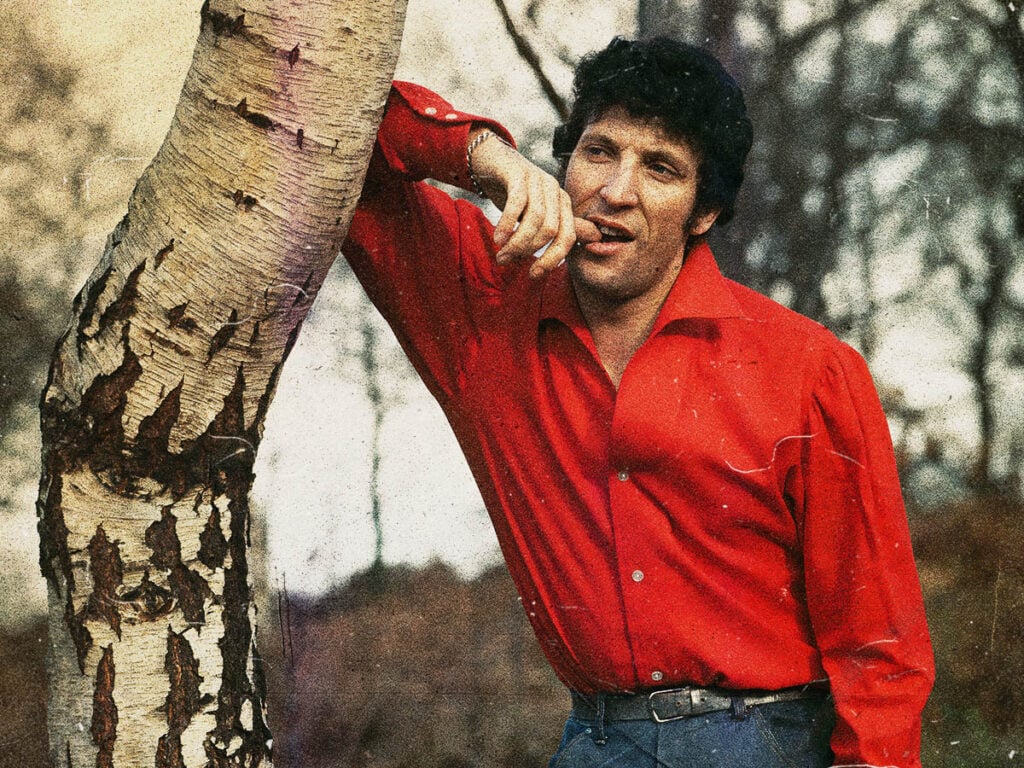
If the single flopped, Jones was likely going to head back to Wales with his tail between his legs, but, fortunately, it became a hit and went all the way to number one. Although the crooner’s vocals were the main selling point of ‘It’s Not Unusual’, Jimmy Page’s lead guitar work also played a part in the success.
Reflecting on his time as a session musician, Page later said it was his “apprenticeship” in the music industry and believes it was instrumental in his growth as an artist. He once explained: “During the time that I was a studio musician – it was a remarkable apprenticeship. Because the studio discipline – everything is literally within seconds on the clock. If the session was scheduled from 10 o’clock to 1 o’clock, if the second hand went beyond, then you would be in overtime.”
Page added: “So you had to be absolutely precise and you had to be able to deliver all the time. If you hadn’t you wouldn’t be seen again. There’d be somebody else. It’s a very close shop but I was fortunate enough to get in there.”
As well as working with Jones, the future Led Zeppelin guitarist also assisted The Who, Marianne Faithfull, Nico and many other esteemed names. It was an eye-opening time for Page, as he learned how to work in a professional setting and hone his skillset depending on who he was playing alongside. After serving his time as a hand-for-hire, Page was well equipped to become a superstar in his own right.
He would take these moments of learning, of finding the right sound for the right time and become a near-perfect arranger. He might have started his life in the shadows of pop music studios, but soon he would use what he learned and take it into the spotlight of heavy rock, forming genres and changing the landscape with every note.


