

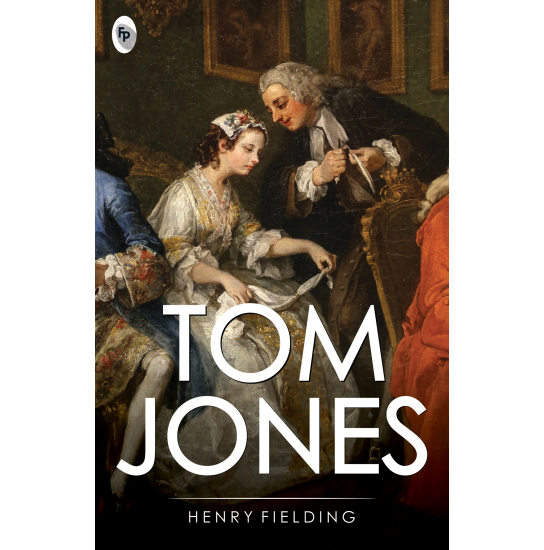
When veteran Guardian critic Robert McCrum ranked Tom Jones – The Foundling fifth on his list of the 100 greatest novels, many readers were surprised. Published in 1749, Henry Fielding’s comic epic is far less widely read today than works like Wuthering Heights, The Great Gatsby, or To Kill a Mockingbird. Yet McCrum argued that its literary power, social scope, and enduring vitality place it among the true foundations of the English novel.
A panoramic satire of 18th-century England
At its heart, Tom Jones is a sweeping comic portrait of society. Fielding populates the story with unforgettable figures: the blustering Squire Western, the hypocritical tutor Thwackum, the scheming Blifil, the seductive Molly Seagrim, and the virtuous Sophia Western. Together they form a satirical cross-section of class, morality, and human folly in Georgian England.
Through their adventures and misadventures, the novel captures the spirit of its age—boisterous, morally conflicted, and vividly alive. Fielding’s narrator speaks directly to the reader with wit and irony, creating a sense of intimacy that felt remarkably modern for its time.
The charm of a flawed hero
Tom himself is an unlikely protagonist: hot-tempered, impulsive, and notoriously amorous. An abandoned child raised by the benevolent Squire Allworthy, he stumbles through life making mistakes, falling into scandal, and learning—slowly—what integrity truly means.
What makes Tom compelling is not his virtue but his humanity. He is generous, loyal, and emotionally open, even when he behaves badly. Readers recognize in him the complexity of real people: the coexistence of good intentions and moral weakness. His steadfast love for Sophia Western, the novel’s moral center, gives his chaotic journey a redemptive arc.
A simple plot, a vast world
On the surface, the story is a familiar one: two lovers separated by intrigue, misunderstanding, and social barriers. But Tom’s journey to reunite with Sophia becomes an episodic tour through inns, highways, drawing rooms, and prisons—each setting introducing new characters and moral dilemmas. The result is a rich social tapestry that deepens our understanding of 18th-century life.
Critics have often compared the novel’s scope to Balzac’s La Comédie humaine for its psychological insight and breadth of social observation.

Born for the screen
Another reason for the story’s lasting popularity is its cinematic energy. The 1963 film adaptation, written by John Osborne and starring Albert Finney, turned Tom into a globally beloved rogue. The movie won four Academy Awards, including Best Picture and Best Director, confirming the tale’s dramatic and visual appeal.
Fielding’s moral vision
Fielding wrote during a time of political tension and legal corruption, and his novel reflects deep skepticism toward institutions and social hypocrisy. Yet he did not divide the world into purely good and evil. Instead, he portrayed human beings as morally mixed—capable of both selfishness and generosity. True virtue, in his view, lay not in rigid respectability but in compassion, honesty, and self-knowledge.
Scandal and success
Upon publication, Tom Jones was criticized by some as morally dangerous entertainment for the aristocracy. Nevertheless, it sold around 10,000 copies in a London of roughly 700,000 people—a remarkable success for its era.
Why it still matters
McCrum’s ranking was ultimately a personal judgment, but his point was clear: Tom Jones helped shape the modern novel. Its narrative voice, social breadth, comic realism, and psychologically complex characters influenced generations of writers.
More than two and a half centuries later, the story of a charming, wayward foundling seeking love and moral maturity still resonates—reminding readers that literature’s greatest heroes are often not the purest, but the most human.
Nếu bạn muốn mình rút gọn thành bản đăng Facebook, viết dạng review ngắn, hoặc giật tít thu hút hơn, mình
Tom Jones – The Foundling and the Appeal of a Lovable Rogue
When veteran Guardian critic Robert McCrum placed Henry Fielding’s Tom Jones – The Foundling at number five on his list of the 100 greatest novels, the decision sparked lively debate. Many readers were puzzled that an 18th-century comic novel—first published in 1749 and far less widely read today—was ranked above modern classics such as To Kill a Mockingbird, The Great Gatsby, and Wuthering Heights.
A novel that captured its age
McCrum’s reasoning centered on the book’s extraordinary connection with readers of its own time and its sweeping portrayal of society. Tom Jones is not just a love story; it is a panoramic satire of 18th-century England. Through memorable characters—the blustering Squire Western, the hypocritical tutor Thwackum, the scheming Blifil, the seductive Molly Seagrim, and the virtuous Sophia Western—Fielding created a lively literary world that is comic, chaotic, and sharply observant.
At the center stands Tom himself: hot-headed, charming, impulsive, and deeply flawed. An abandoned child raised by the benevolent Squire Allworthy, he grows into a young man whose romantic entanglements and moral missteps constantly land him in trouble. Yet his generosity, emotional openness, and unwavering love for Sophia make him one of literature’s most engaging antiheroes.
A simple plot with rich social scope
On the surface, the novel follows a familiar pattern: two lovers separated by intrigue, misunderstanding, and social barriers. But Tom’s journey to reunite with Sophia becomes a tour through inns, country estates, city streets, and prisons, exposing readers to a wide range of social classes and human situations—comic, tragic, and tender. This breadth has led some critics to compare the novel’s social vision to Balzac’s later La Comédie humaine.
From page to screen
Another factor in the novel’s lasting appeal is its dramatic vitality. The 1963 film adaptation, scripted by John Osborne and starring Albert Finney, transformed Tom into a globally beloved rogue. The film won four Academy Awards, including Best Picture, Best Director, Best Adapted Screenplay, and Best Score, confirming the story’s cinematic power.
Fielding’s view of human nature
Fielding wrote during a period of political tension and legal complexity, and he was sharply critical of corruption and social hypocrisy. In Tom Jones, he presents a world where good and evil are rarely pure and often coexist within the same person. For Fielding, outward behavior does not always reflect inner character; human beings are morally complex, capable of both selfishness and kindness.
Scandal, success, and legacy
When it first appeared, the novel drew criticism from some moralists, who dismissed it as dangerous entertainment for the aristocracy. Nevertheless, it became a bestseller, selling around 10,000 copies at a time when London’s population was only about 700,000.
Henry Fielding (1707–1754), born into a declining aristocratic family, was a multilingual scholar and a writer shaped by financial hardship and a turbulent social climate. His experiences informed the novel’s blend of satire, realism, and moral inquiry.
Why it still matters
In McCrum’s top-100 list, the highest-ranked works were largely from the 17th and 18th centuries, and his selection reflected personal judgment rather than a fixed canon. Yet his argument highlighted an important point: Tom Jones is a foundational work of the English novel, notable for its narrative voice, psychological insight, and expansive social vision.
Rather than debating rankings, McCrum suggested that modern readers—especially younger generations—would benefit more from discovering the richness of classic literature. Tom Jones endures not because its hero is virtuous, but because he is recognizably human: flawed, impulsive, generous, and ultimately capable of growth.


