

Laurence Louie, a formidable contender from Top Chef Season 23, made headlines on the latest episode of the hit cooking show Beat Bobby Flay by defeating the culinary legend Bobby Flay in a stunning display of skill, strategy, and daring innovation. This remarkable victory was far from a stroke of luck; it was the culmination of meticulous planning, a bold culinary vision, and a series of ingenious techniques that left both the judges and his opponent astounded. Here is an in-depth look at the three key strategies that propelled Louie to this impressive triumph.
The first major element of Laurence Louie’s success came in the initial round, which required contestants to work with Maitake mushrooms. Many expected him to rely on his Cantonese roots and conventional Asian techniques such as stir-frying or steaming. Instead, Louie surprised everyone by introducing a dish that reflected his diverse culinary experiences. Drawing inspiration from his time in Mediterranean kitchens, he created a Maitake Börek—a traditional savory pastry from the Mediterranean region—crisply fried and paired with a delicate orange crème fraîche and feta cheese.
This move demonstrated a fearless willingness to step outside his comfort zone. Louie showed that he was not confined to a single culinary tradition but possessed a globally adaptable approach. By merging Mediterranean techniques with Asian ingredients, he not only captivated the judges with unexpected flavors but also established a strong psychological advantage, signaling that he could handle complexity with finesse. This daring fusion ultimately earned him a decisive win in the opening round.
In the second round, Louie leveraged a strategic maneuver often referred to as “home-court advantage.” When given the opportunity to choose the dish for his final face-off with Bobby Flay, he selected Cheung Fun, a traditional Hong Kong rice noodle roll. This decision placed Flay in unfamiliar territory. Despite his decades of experience, Flay admitted during the show that he had never prepared Cheung Fun himself, a task requiring precise batter consistency, careful rolling, and delicate handling that could not be quickly mastered under competitive pressure. By forcing Flay to perform on Louie’s terms, he secured a significant competitive edge even before cooking began.
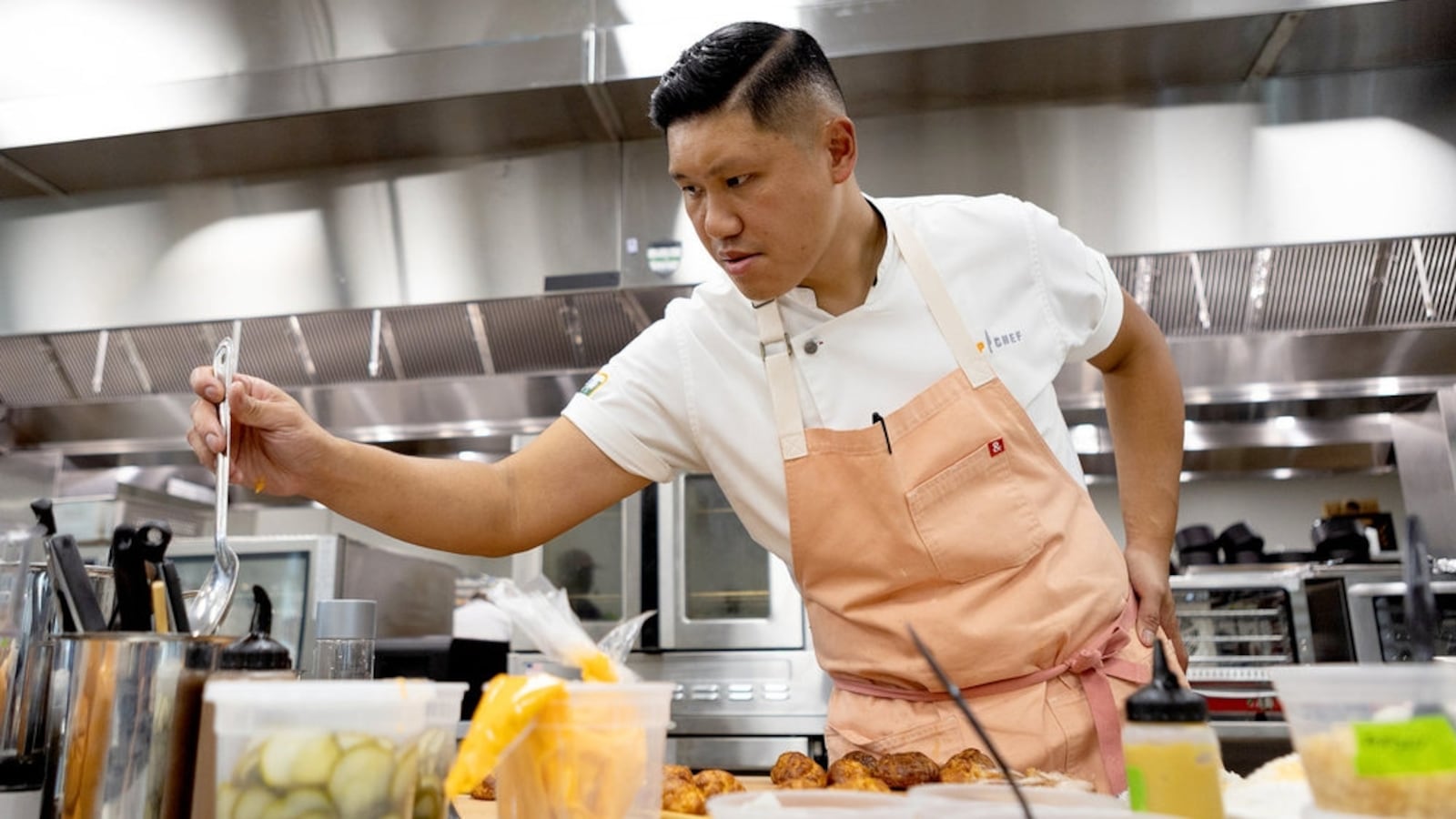
Louie’s approach in this round went beyond mere tactical thinking. He infused the preparation with a sense of performance and showmanship reminiscent of classic Hong Kong street kitchens. Using two large cleavers, he chopped pork shoulder by hand with remarkable speed, staying true to traditional methods rather than relying on modern machinery. This not only showcased his technical prowess but also brought an engaging visual element to the kitchen, turning cooking into a dynamic spectacle.
The final dish, Louie’s Cheung Fun, was a masterful combination of traditional technique and contemporary innovation. The filling, composed of fresh shrimp and hand-minced pork, maintained its natural juiciness, while the sauce—a specially crafted sweet soy blend topped with crispy ginger panko—added texture and a modern twist. This combination of authentic flavor and inventive enhancement elevated the dish, reflecting both technical mastery and a personal narrative. The presence of his father in the audience further inspired Louie, allowing him to infuse each bite with emotion and pride, creating a culinary story that resonated with the judges on multiple levels.
Bobby Flay, despite his quick learning and impressive adaptation, could not replicate the flawless texture of Louie’s rice noodle rolls. The precision in the thinness and smoothness of the dough, combined with perfectly balanced fillings, demonstrated a level of craftsmanship that only someone intimately familiar with the dish could achieve. Louie’s ability to combine skill, innovation, and personal storytelling ultimately proved insurmountable, securing him a well-deserved victory.

This win against a titan of American cuisine was more than a personal milestone for Laurence Louie. It reinforced his status as a rising star in the culinary world, extending his impressive track record that includes a Chopped championship and a James Beard Award nomination. By blending strategic thinking, exceptional technical execution, and a compelling narrative through his cooking, Louie has positioned himself as a new-generation champion—one capable of redefining what it means to excel in the competitive culinary landscape. His performance on Beat Bobby Flay serves as a testament to the power of creativity, precision, and courage in professional cooking, marking the beginning of what promises to be a stellar trajectory in the culinary arts.


