

A tense confrontation between a member of the public and a family accused of shoplifting has erupted inside a Morrisons supermarket, with the incident captured on video and sparking intense online debate. The footage, circulating on social media and discussed on the Point Blank Podcast, shows a heated exchange where a Scottish man accuses a group of switching price labels on high-value items and consuming goods before purchase.

The video begins with the accuser, described in the accompanying commentary as a “patriot,” directly challenging a family he alleges were seen peeling labels off salmon packages to replace them with cheaper barcodes. “I watched her peel the labels off the salmon. Put other bar codes on,” the man states forcefully to what appears to be a store employee. His accusations quickly broaden to include eating unpaid-for pretzels from the store’s bakery.
Throughout the encounter, the accused family largely responds with phrases like “I want to buy” and minimal English, a point the commentator highlights as a frequent tactic. The confronter remains undeterred, repeating his allegations and filming the group despite their objections. “Because it’s a free country. It’s Britain. I can [film] if I like,” he retorts when questioned about his phone.
The language escalates, with the Scottish man labeling the group “thieves” multiple times in blunt, colloquial terms praised by the podcast hosts for their directness. The hosts analyze the clip, expressing admiration for the confronter’s approach and speculating the family’s background, suggesting they appear to be “Romanian gypsy” migrants, a claim they support with anecdotal comparisons to organized begging and theft scams witnessed in other European cities.
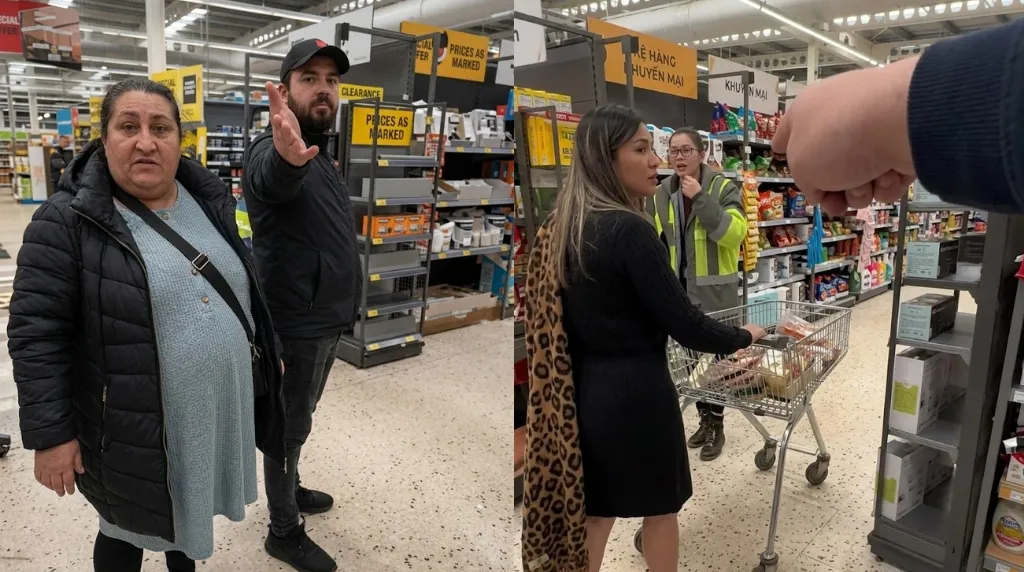
“This is citizen journalism exposing this time and time again,” one host asserts, framing the video as part of a crucial trend decentralizing media and revealing realities allegedly ignored by mainstream outlets. They argue such footage is pivotal in shifting public perception by documenting the “prevalence” of these incidents, which they believe are widespread but underreported.
The broader discussion on the podcast condemns the alleged actions as a systematic fraud burdening retailers and, by extension, taxpayers. The hosts link the supermarket incident to wider grievances about immigration and benefit systems, alleging some individuals engage in fraud while also receiving state support. This narrative frames the confrontation as a justified act of public vigilance.
Supermarket theft, particularly through label-swapping or “ticket switching,” represents a significant loss-prevention challenge for retailers nationwide. Incidents like this force store staff into difficult positions, balancing customer accusations with de-escalation and procedural investigations. Morrisons has yet to issue a public statement regarding this specific altercation.
The video has ignited fierce discussion online, with views sharply divided. Some viewers applaud the confronter’s actions as a necessary stand against crime, while others criticize the approach as aggressive public shaming and potential racial profiling. Legal experts often warn that while citizens can make a citizen’s arrest for a witnessed indictable offence like theft, confrontations can escalate dangerously.
This event taps into deeper, ongoing national conversations about retail security, immigration, and the role of citizen-recorded video in modern society. The passionate reaction it has provoked underscores the highly charged nature of these topics. As retailers and police continue to combat organized shoplifting, public interventions of this kind remain ethically and legally contentious.
The incident serves as a stark reminder of the pressures on the retail sector and the volatile mix of social tensions that can spill onto the shop floor. Whether viewed as vigilantism or civic duty, the fallout from this confrontation extends far beyond the supermarket aisles, challenging perceptions of community, justice, and security in contemporary Britain. The debate it has sparked shows no sign of abating.


